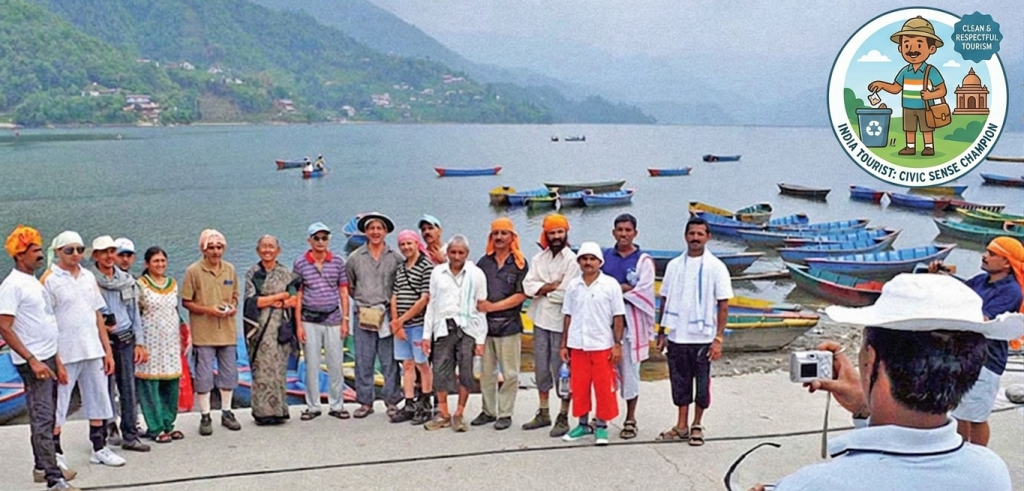

“Garmi Se Behal? Chalo Nepal.” is a popular slogan that has become famous in India, and with this slogan, there has been a great increase in tourism arrivals in 2026, especially in Pokhara and Mustang. At the moment, there is the highest level of Indian tourists in Pokhara, with hotel occupancy of more than 90%. Not only the hotels, but all businesses and service sectors have benefited from Indian tourists. Just around three months ago, the Nepal Government introduced a two-day weekend, Saturday and Sunday, due to which internal tourism has also increased in Pokhara. Previously, Pokhara itself was not the main hub for maximum visitors; it had always been an entry point for various treks and destinations like Mustang. Many people did not visit Pokhara just for Pokhara, but lately, Pokhara has welcomed many visitors specifically to experience the city itself, which is positively impacting the tourism service sector.
Now, let’s talk about Indian tourists. There are many reasons behind the increasing number of tourists visiting Nepal, especially Pokhara. Everyone knows Indians do not need a visa or additional documentation, excluding permits in some areas like ACAP, to visit Nepal. They can easily travel to Nepal whenever they want. Nepal has never placed significant documentation pressure on Indian people visiting the country. Many Indian people even work or run businesses in Nepal, but the question is: why is tourism so high in 2026, and why not in 2025, 2024, 2023, or 2022?
The years 2024 and 2025 seemed to be recovery phases after COVID-19. By the end of 2019 and throughout 2020, there was almost no tourism in Pokhara, and many tourism-related businesses were forced to close. In major places of Pokhara like Lakeside, most businesses operate by paying high monthly rent to landowners. It became impossible for businesses to survive while paying rent without receiving customers. As a result, many businesses shut down and suffered huge losses. Slowly, 2022 became the initial spark for post-COVID reopening. Borders reopened, flight routes started operating smoothly again, but full recovery was still far away. It was not an immediate fix; rather, 2022 became a year of clearing debt from 2020 and 2021. Business growth remained limited, though the recovery rate reached 51.36%, which was a positive sign.
According to Annapurna Express, 2022 marked a slow start for the hospitality business, as Nepal welcomed 614,869 tourists, a massive 306% increase from the lockdown year of 2021. This means Pokhara saw only around 250,000 to 270,000 international tourists throughout the year, making 2022 largely a debt-clearing year.
Businesses began experiencing a genuine profitable turnaround from the mid to late autumn season of 2023. Nepal Rastra Bank supported businesses with the Refinancing Fund Policy for the hospitality sector, where banks were instructed to restructure tourism-related loans, pause interest penalties, and extend repayment deadlines. This created a positive impact and provided relief for hospitality business owners.
After that, Nepal slowly recovered from the COVID-19 pandemic, and at the moment, Nepal seems to have fully recovered.
However, discussions around Indian tourists often focus only on roadside cooking and civic behavior. Many people say, “Indian people’s cook on the roadside, so they bring no economic benefit.” But if we go into nearby 3-star, 5-star, and even standard hotels, we can see they are fully occupied by Indian tourists. In any tourism market, there are always visitors ranging from low spenders to high spenders. Regarding cleanliness, maintaining sanitation is not only the tourist’s responsibility but also our duty through proper monitoring and management.
Many religious Indian pilgrims have strict dietary requirements. Some only eat food prepared by trusted people, some seek 100% pure vegetarian restaurants, while others avoid even garlic and onion. In places like Pokhara finding such specialized accommodation or restaurants seems to be difficult. Indian vloggers and content creators have also contributed greatly by promoting Nepal. Their influence has significantly increased Nepal’s tourism visibility. After Narendra Modi visited Muktinath Temple, religious tourism to Nepal increased further, and current data suggests Indian tourist arrivals will continue to rise.
ATM, government and local authorities should focus on long-term strategies to manage and increase tourist arrivals. This is the time of off-season in Pokhara but hotels are seeing nearly 80–90% occupancy, which shows the positive impact for the Tourism business. However, if tourist numbers continue to grow at this pace, Pokhara may struggle to sustain future tourism demand. Therefore, the government should focus on increasing tourist spending by developing new paid activities and ensuring proper utilization of tourism resources. Collaboration with tourism entrepreneurs is the most, so Nepal can generate higher revenue.
India is also encouraging people to spend within the region as an alternative travel option, and Nepal has become highly convenient for Indian tourists due to UPI payment availability. In such a situation, stronger collaboration with the Indian government could help Nepal gain even greater economic benefits.